Top Media Questions for Utah Realtors 2026
Ask Us Anything: Top Media Questions from Realtors in Utah
Utah’s housing market in 2026 looks very different from the frenzy of just a few years ago—more balanced, more data-driven, and far more scrutinized by the media. This “Ask Us Anything” guide pulls together the top questions Utah Realtors are getting from journalists, clients, and even fellow professionals, and offers clear, media-ready answers you can use today.
1. What’s really happening in the Utah housing market in 2026?
One of the first media questions Utah Realtors hear is simple but loaded: “So, how’s the market?” In 2026, the honest answer is that Utah has shifted from a sprint to a steady jog. After years of double-digit price gains, we’re now in a phase of slow, steady, and more sustainable growth.
Statewide data from Realtor.com for June 2026 shows a median listing price of about $575,000—down roughly 2.2% year over year—while the median sold price sits around $519,785, actually up 4.7% year over year. Inventory is improving, with active listings up just over 5%, and homes are spending a bit longer on the market, around 53 days on average. That means buyers have more breathing room, but sellers are still achieving strong sale prices when homes are well-prepared and accurately priced (Realtor.com).
Zillow’s July 2026 data places the typical Utah home value near $540,000, with homes going under contract in about 28 days and selling at roughly 100% of list price (Zillow). Redfin reports a June median sale price around $534,000 and notes that just over 20% of homes sell above asking (Redfin). Taken together, these sources confirm a market that’s balanced, not busting: modest appreciation, more inventory, and fewer bidding wars than the early 2020s.
📌 Key takeaway for media: Utah is no longer a runaway seller’s market. It’s a cautiously balanced market with 1–3% annual price growth and better options for buyers.
2. Are home prices in Utah going up or down?
Another frequent media question for Utah Realtors is whether prices are finally falling. The truthful, nuanced answer is: it depends where you look, but statewide, prices are holding or inching up—not crashing. Listing prices have softened slightly, but closed-sale prices and value indices still show modest appreciation.
The Utah Economic Council projects median home prices to grow about 2.5% in 2026, with statewide appreciation likely in the 1–3% range barring a major interest-rate shift (Utah Economic Council). The Gardner Policy Institute’s forecast for Salt Lake County expects overall median prices to rise about 1%, with single-family homes essentially flat at $620,000 and condos/townhomes up around 3% to $440,000. This is a sharp contrast to the double-digit spikes of just a few years ago, but it’s far from a bust scenario.
For interviews, Utah Realtors can confidently say: “We’re seeing a plateau with a gentle upward tilt, not a cliff.” That framing helps the public understand that slower growth is a sign of a healthier, more sustainable Utah housing market, not a red flag of collapse.
3. How does the Utah housing market vary by region?
Reporters covering Utah real estate quickly realize there is no single “Utah market.” The dynamics in Park City look very different from those in Eagle Mountain or Ogden. Smart Realtors prepare hyperlocal talking points so they can answer questions with city-level detail instead of broad statewide generalities.
Along the Wasatch Front, for example, Salt Lake County’s median sales price has edged down about 0.5% year over year to roughly $547,000, while statewide prices ticked up about 1.1% to around $525,000 (UtahNeighbor). Utah County, by contrast, has seen stronger gains, with median sale prices up approximately 7% to about $548,000 (UTLocal). Days on market also vary widely: some Salt Lake neighborhoods average under 50 days, while areas like Herriman can stretch past 80 days (KrisBowen.com).
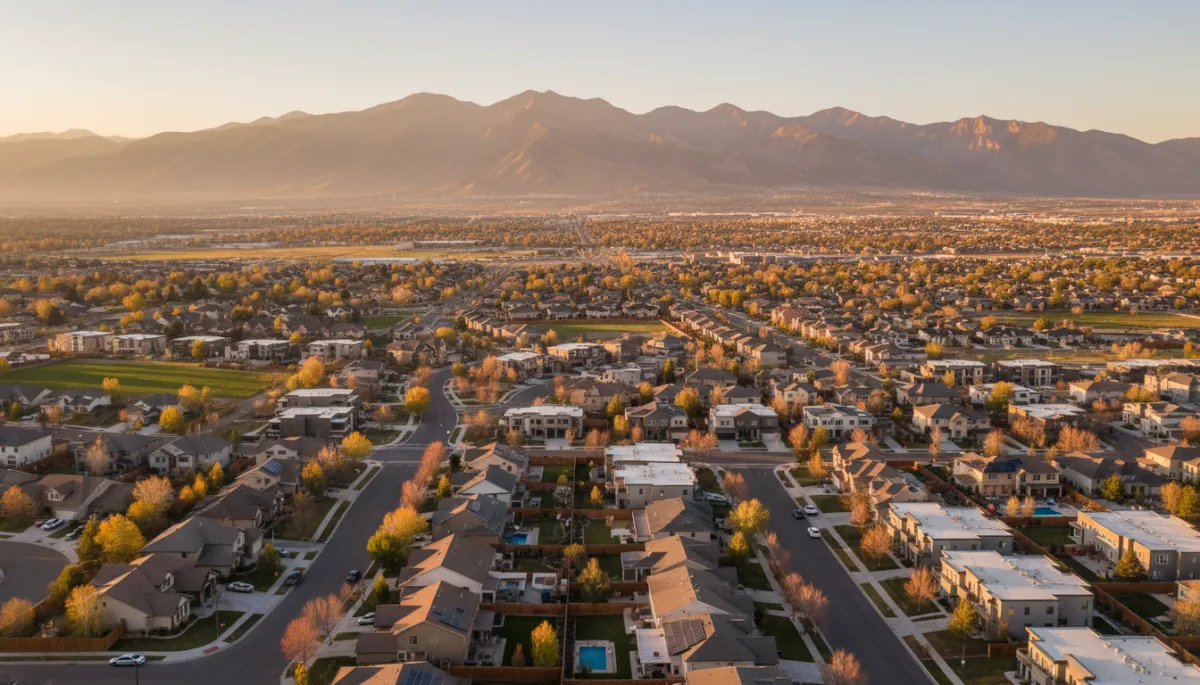
Hyperlocal data helps Realtors explain why days on market differ between Utah neighborhoods.
When the media asks, “Is Utah still unaffordable?” a powerful response is to contrast metros: Salt Lake City listing medians around the high $500Ks, Provo–Orem in a similar band, Ogden–Clearfield slightly lower, and St. George higher with longer days on market (FRED). That nuance shows you’re not just quoting headlines—you’re interpreting the market for your clients and your community.
💡 Pro Tip for Realtors: Keep a simple one-page “by-city snapshot” with median price, days on market, and sale-to-list ratio for your main service areas. It becomes your go-to media cheat sheet.
4. What should Utah buyers know about financing and affordability right now?
In 2026, another hot media topic is financing: “How are Utah buyers coping with higher mortgage rates?” For Realtors, this is a chance to educate without minimizing the challenge. Rates in the 6–7% range feel high compared to the historic lows of 2020–2021, but they are still moderate by long-term standards (KUER).
The most media-ready answer emphasizes preparation and options. Encourage buyers to start with a full pre-approval, not just a quick pre-qualification, so they understand exactly what monthly payment they’re comfortable with. Then, highlight the tools available in Utah:
Down payment assistance through Utah Housing and similar programs, some offering up to 6% toward down payment and closing costs—while clearly explaining these are often structured as second mortgages with their own terms (KUER).
Builder incentives in new construction communities—like temporary 2.99% promotional rates, rate buydowns, or appliance packages—to ease the payment shock in places such as Eagle Mountain, Saratoga Springs, and parts of Salt Lake and Davis Counties.
Accessory dwelling units (ADUs) as a long-term affordability strategy, allowing buyers to offset their mortgage with rental income as more cities relax ADU rules.
When journalists ask, “Is it still a good time to buy in Utah?” you can answer: “For buyers with stable income, realistic expectations, and a long-term horizon, yes—especially if they leverage today’s incentives and understand that rates can be refinanced later.”
5. How can sellers stay competitive against new construction?
A growing Realtor question—often echoed in media interviews—is how resale homes can compete when builders are advertising lower teaser rates and shiny new finishes. The key is to position resale properties strategically and emotionally, not just financially.
First, emphasize what new construction can’t always offer: established neighborhoods, mature landscaping, completed amenities, and immediate move-in. Second, help sellers bridge the gap by offering their own incentives: a closing-cost credit, a rate buydown, or flexibility on closing timelines. In a balanced market, these small gestures can make a big difference without significantly eroding net proceeds.
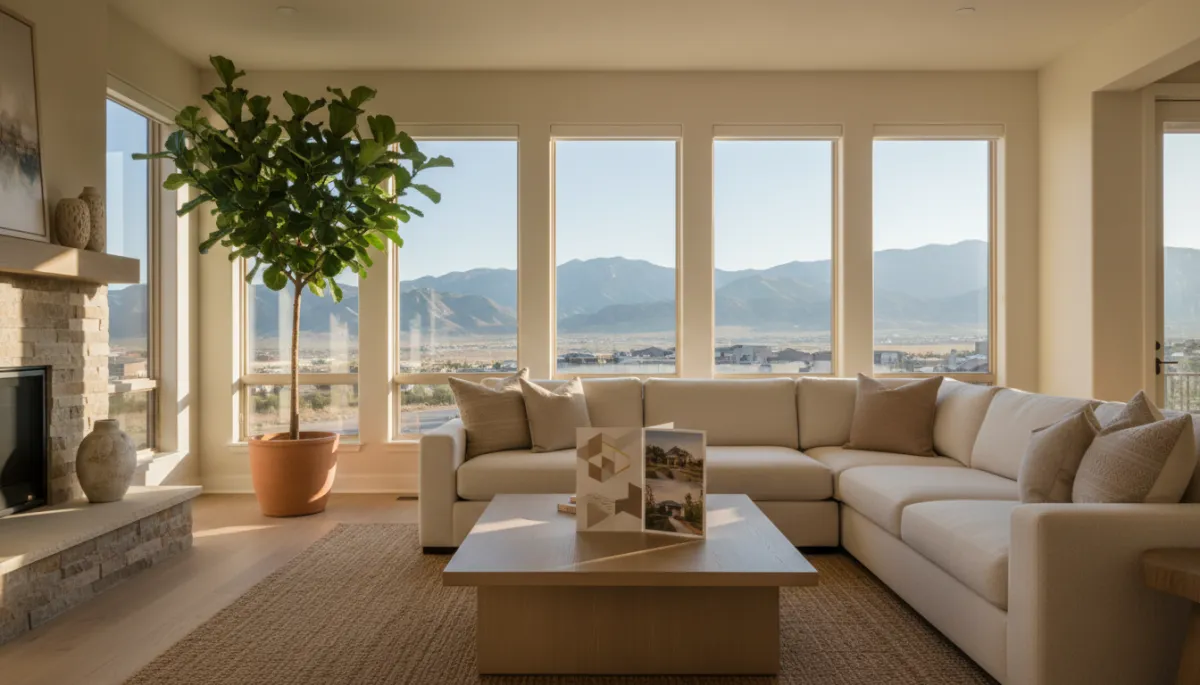
Thoughtful staging and incentives help resale homes compete with Utah’s new builds.
Media often asks, “Are sellers having to slash prices?” In many Utah submarkets, the more accurate story is that motivated sellers are adjusting strategy, not panicking. Homes that are staged, photographed professionally, and priced in line with recent comparable sales still attract strong offers. Overpriced or poorly presented homes, on the other hand, sit longer and eventually require price reductions—fueling the perception of a “weak” market even when well-priced homes are moving briskly (UTLocal).
6. What are the most effective real estate tips for Utah Realtors in 2026?
Beyond market stats, reporters increasingly want to know: “What are top agents doing differently now?” Here are real estate tips that Utah professionals can share on camera or in print—and also apply in their daily business.
Lead with data, translate with stories. Use concrete numbers—median prices, days on market, sale-to-list ratios—but always connect them to real-life scenarios. For example, explain how an extra 10 days on market gives buyers time to conduct inspections and compare options, rather than rushing into offers.
Become the “hyperlocal economist” for your niche. Whether you specialize in downtown condos, Lehi tech-corridor homes, or St. George vacation properties, track your micro-market weekly. Reporters and clients both gravitate toward agents who can say, “In this specific ZIP code, inventory is up 12% and price growth has flattened.”
Educate on ADUs and zoning changes. With more Utah cities relaxing ADU rules, agents who can explain rental potential, permitting basics, and resale implications instantly add value—especially for younger, payment-conscious buyers (KUER).
Stay ahead of regulatory shifts. From the reduction in pre-license education hours for Mortgage Loan Originators to the upcoming Uniform Appraisal Dataset (UAD) 3.6 changes effective November 2, 2026, staying informed lets you brief clients and media before questions even arise (Utah Division of Real Estate).
Invest in digital storytelling. National marketing trends show a continued shift toward short-form video, social proof, and interactive content (Forbes). Utah Realtors who combine market insights with visually rich property tours and neighborhood profiles are more likely to be noticed by both consumers and journalists.
📌 Media-ready sound bite: “In 2026, successful Utah Realtors aren’t just salespeople—they’re local economists, housing educators, and storytellers for their communities.”
7. How should Utah Realtors handle media inquiries professionally?
Many Utah agents are suddenly finding themselves quoted in local newspapers or featured on television segments. The National Association of Realtors encourages professionals to stay informed about market trends and maintain a strong online presence so they’re ready when the media calls (NAR). Handling these inquiries well can position you as a go-to expert for years to come.
Consider these best practices when the email subject line reads, “Media Request”:
Respond quickly, even if it’s a “not yet.” Journalists are often on tight deadlines. A prompt reply—confirming your interest and asking for their timeline and questions—signals professionalism and increases the odds you’ll be quoted accurately.
Prepare three core messages. Before the interview, outline three key points you want to make about the Utah housing market or your specialty. No matter where the conversation goes, gently steer back to those anchors.
Use clear, non-technical language. Replace jargon like “absorption rate” with “how quickly listings are being purchased.” The clearer you are, the more quotable you become—and the more your comments help the public.
Fact-check your own quotes. If possible, offer to provide a brief written follow-up summarizing key numbers or definitions. This reduces the risk of misinterpretation and reinforces your reputation as a careful, data-driven source.
Over time, consistent, thoughtful participation in local media—whether through TV, radio, podcasts, or business journals—can position you as one of the trusted voices on Utah real estate. That visibility benefits your brand, your brokerage, and your clients.
8. Where can reporters and consumers go for reliable Utah real estate data?
A frequent “Ask Us Anything” query from journalists is, “What sources do you trust?” As a Utah Realtor, you can add value by pointing them to reputable, transparent data providers and local institutions instead of social media rumors or clickbait headlines.
National listing platforms like Realtor.com, Zillow, and Redfin for median prices, days on market, and inventory trends—always noting that methodologies differ, which explains slight discrepancies.
Local and state-level reports from the Utah Association of Realtors, the Kem C. Gardner Policy Institute, and the Utah Economic Council for forecasts, economic context, and county-level breakdowns.
Government and academic sources such as FRED (Federal Reserve Economic Data) and the Economic Report to the Governor for long-term price indices and macro trends.
By citing these sources in your own content—blog posts, social media updates, or Q&A sessions—you signal to both media and clients that your insights are grounded in verifiable data, not just gut feeling.
9. Turning “Ask Us Anything” into a strategic advantage
Finally, many Utah Realtors ask: “How do I turn all these questions into business opportunities?” The answer lies in embracing an ongoing Ask Us Anything mindset. Every media inquiry, every client email, and every open-house question is a signal about what your market is curious or confused about right now. When you respond thoughtfully and publicly, you become the bridge between data and decisions.
Consider hosting a quarterly “Ask Us Anything: Utah Real Estate” live stream or in-person workshop. Use fresh housing-market stats, answer audience questions in real time, and invite a lender or appraiser to join you. Then, repurpose the best questions and answers into short articles, social posts, or media pitches. Over time, you’ll build a searchable library of content that both journalists and clients can rely on when they want clear, Utah-specific real estate insights.
In a 2026 market defined by modest price growth, improving inventory, and a more discerning public, your role as a Realtor in Utah is bigger than closing deals. You are an interpreter of trends, a guardian of accurate information, and a trusted voice when headlines feel noisy. Lean into the questions. Invite more of them. And be ready with answers that are honest, data-backed, and grounded in the realities of the Utah housing market today.
Ready to Elevate Your Next Alaska Listing?
Have questions about real estate photography, drone media, floor plans, virtual tours, or other listing services? DMD Real Estate Photography Utah is here to help. Get the answers you need and choose the right media package to showcase your property at its best.
